How to Build a More Balanced Everyday Meal
Use variety and practical food combinations rather than aiming for a perfect plate.
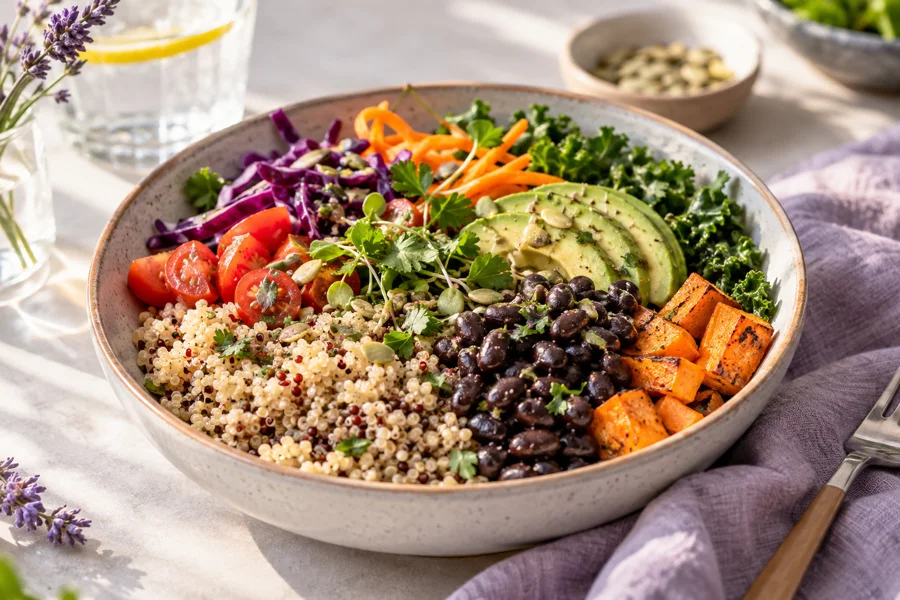
Table of Contents
Use a flexible food framework
A more balanced everyday meal usually begins with variety, not a strict visual formula. Consider a familiar base, a protein-containing ingredient and vegetables or fruit, with other foods that suit your needs across the day. A mixed soup or stew can fit this approach as well as separate items on a plate.
This guide does not prescribe portions or an individual diet. Allergies, medical conditions, age, activity and cultural preferences can change what is appropriate. A qualified professional can help when you need tailored nutrition advice.
Make a familiar meal more varied
- With a rice meal, consider a suitable bean, lentil, egg, tofu or other filling and vegetables you enjoy.
- With a sandwich, think about its filling and what you can conveniently eat alongside it.
- With soup, consider whether bread or another food would make the meal more suitable for your appetite.
- With pasta, add ingredients that bring variety rather than assuming the pasta must be replaced.
- Across the week, rotate a vegetable or protein-containing ingredient rather than changing every meal at once.
Plan with your cupboard and budget
Check what is already available. Frozen vegetables, canned beans and shelf-stable grains can be useful when shopping or cooking time is limited. Compare labels and choose products suited to your preferences; expensive wellness branding is not a requirement.
Build one backup combination from foods you use regularly. For example, ready-cooked lentils with tomato and bread can be a simple meal when your original plan changes. Follow appropriate food handling and storage guidance.
Avoid all-or-nothing language
A single meal does not need to contain every nutrient in ideal proportions. Look at the broader pattern and the foods you can realistically access. If a meal is simple, consider one addition rather than labelling it a failure.
Food is also social and cultural. Keep familiar flavours and adapt ingredients gently. A balanced plan that is enjoyable and affordable is easier to use than an elaborate menu that does not fit your household.
Ask for individual support when needed
If meal planning is difficult because of a health condition, restrictions, low appetite or distress around food, general blog advice may not be enough. Seek support from a qualified healthcare professional or registered dietitian appropriate to your location.
For ordinary cooking inspiration, choose one practical meal and try it. Notice whether the ingredients, portion and preparation fit your day, then adjust. The linked Food guides offer meal ideas rather than medical nutrition recommendations.
Explore more: Food: build a balanced meal
Explore more: Healthy breakfast ideas



Reader Comments
All comments require Admin approval. Do not include sensitive personal or medical details.
Leave a comment
Your display name and approved comment will be public. Email stays private. Privacy Policy
Loading comment form…