Beginner’s Guide to Meal Prep
A small, flexible plan for preparing ingredients and reducing daily kitchen decisions.
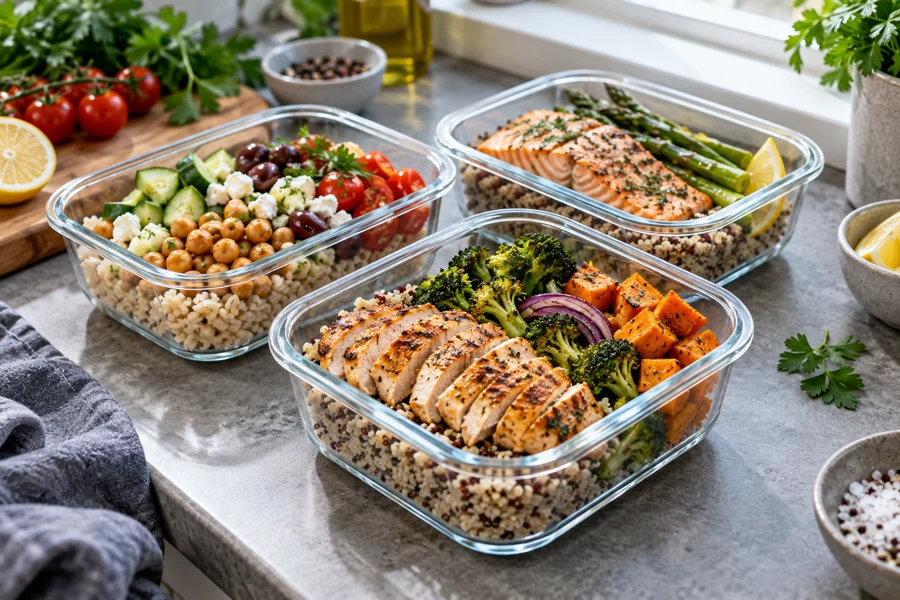
Table of Contents
Start with components, not a week of identical boxes
Meal prep means doing some of tomorrow’s work today. It can be as modest as washing a suitable vegetable, writing a shopping list or cooking one base. You do not need to fill a fridge with identical lunches or prepare every meal on Sunday.
Begin with two meals you already know how to cook. Check your calendar for the days you will eat at home and the days you may be away. That prevents a well-intentioned batch from becoming forgotten food.
Build a small, workable plan
- Check the fridge, freezer and cupboard before buying anything. Write down ingredients that need using first.
- Choose a base such as a grain, a protein-containing food such as beans or tofu, and two vegetables.
- Plan different finishes: a soup one day, a bowl with dressing another day, or a wrap assembled at serving time.
- Confirm you have clean containers and enough refrigeration or freezer space.
- Make a short shopping list with quantities suited to your household, not an imagined perfect week.
A practical two-meal example
Suppose you choose a tomato-lentil mixture, a cooked grain and roasted vegetables. Serve the first meal as a bowl. For the second, loosen some lentils with water into a soup and have bread alongside. Pack crisp toppings separately so their texture survives.
You can also prep ingredients without cooking a complete meal: measure dry oats, portion a spice mix or group unopened cans for a quick dinner. This is useful when plans change often or you do not have much cold storage.
Cooling, labelling and using what you made
Divide cooked leftovers into shallow containers and refrigerate promptly. FoodSafety.gov gives food-specific storage limits; do not assume every prepared ingredient lasts a whole week. Label containers with the food and preparation date, and freeze suitable portions if they will not be used within the recommended refrigerated period.
Set an easy-to-see use-first area. Keep a small freezer list so a packed freezer does not become a mystery. Reheat and thaw according to reliable guidance for the particular food; appearance alone does not establish safety.
Review the first attempt
At the end of the week, ask which component saved time and which remained untouched. Perhaps you liked prepared vegetables but disliked reheated pasta. Adjust one thing rather than buying more containers or imposing a stricter routine.
Meal prep should reduce decisions. If the process takes longer than cooking the meals normally, scale it back. The best starter system is one you can repeat with your actual schedule and kitchen.
Explore more: Store fruits and vegetables
Explore more: Quick weeknight dinners
Reader Comments
All comments require Admin approval. Do not include sensitive personal or medical details.
Leave a comment
Your display name and approved comment will be public. Email stays private. Privacy Policy
Loading comment form…